
 By
By This was originally published as the April 2025 CitSci newsletter. Want citizen science in your inbox? Subscribe today.
Hey from the CitSci team!
It’s a big month—both Citizen Science Month and Earth Month—and we’ve got tons of ways for you to turn curiosity into action. 🌱🔬
CitSci is a proud partner in SciStarter’s One Million Acts of Science campaign, and everything you contribute through the CitSci app or website automatically counts toward the One Million Acts challenge, where the global community adds data to citizen science projects and attends events—over a million times.
🔎 What’s in this newsletter:

Ready to make your act of science count? Let’s get into it 👇
🧪 Extremophile Campaign: In the Wild and In Your Home
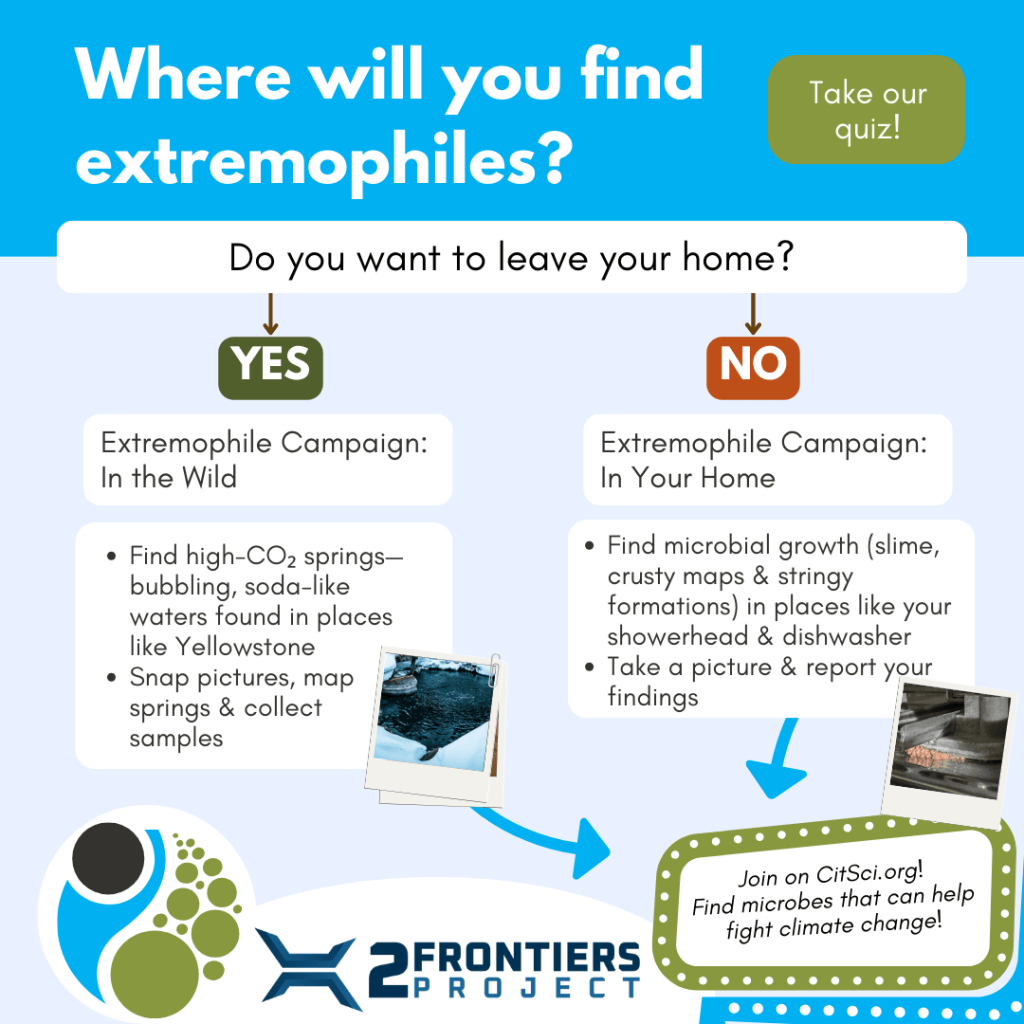
Microbes with extreme powers are all around us—and we need your help to find them! The Extremophile Campaign, led by The Two Frontiers Project and hosted on CitSci, invites you to explore places where these incredible organisms (who do things like eat carbon and might hold the key to addressing climate change) may be thriving.
🔍 In Your Home
Search for microbial life in common household spots, wherever slime can be found, including:
Thanks to Chloe Payne, an undergraduate at Colorado State University, we’ve added a new Water Heater Sampling Guide to help volunteers collect safe, high-quality samples from an under-explored hotspot.
📄 Find the sampling guide on the CitSci resources page
📧 Request a free sampling kit: sarah.newman@colostate.edu
🔗 Join “In Your Home” on CitSci
🏞 In the Wild
You can also find microbes outside your home! Visit bubbling CO₂-rich springs (“soda springs”) or unusual environments in nature—like Yellowstone or the Rocky Mountains—to help researchers document rare extremophiles in wild habitats.
🔗 Join “In the Wild” on CitSci
🌍🚯 #LeaveNoTrash University Challenge | April 19–27
This Earth Month (April 19-27, 2025), CitSci and Leave No Trace are calling on universities worldwide to take action for a cleaner planet!


You can participate on your own via CitSci, but we also invite you to lead your community for greater impact.
How to Join:


📰 News Spotlight: Gulls Reveal Trashy Truths
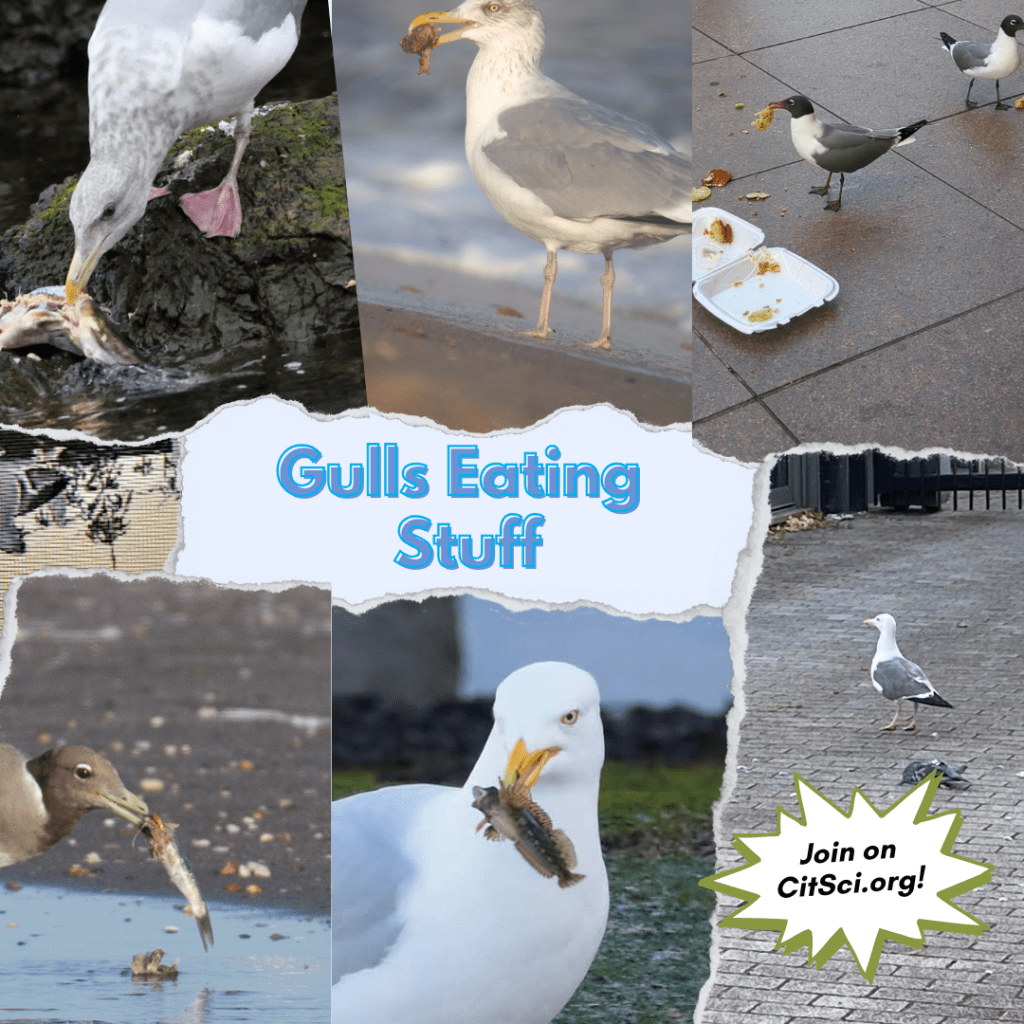
We love when unexpected science stories go global! In this recent Guardian article, researchers used citizen science to uncover the truly wild diets of seagulls—showing that gulls are truly predators, and not merely opportunists snatching people’s tasty snacks.
📍 “From profiteroles to moles: Project uncovers gulls’ surprising diet”
🗞️ Read the story on The Guardian
It’s a great reminder that your observations—no matter how small or silly they seem—can lead to serious insights!
Support Students with a Gift
Help us raise $10,000 to support student software developers who want to make a difference! CitSci students gain hands-on experience in participatory science while working alongside experienced developers to improve community projects. Many have gone on to careers in nonprofits, government, and industry.
A gift of $10, $20, or more provides meaningful work and learning experiences for students—and who knows, they might be working for you one day!

 CitSci.org Blog