

 By
By April is both Citizen Science Month and Earth Month. That means there’s no better time to do science that increases our understanding of the natural world!
At CitSci this month, we’re excited to be a partner in SciStarter’s One Million Acts of Science campaign, a global effort to spark over one million science actions—chiefly, logging data for a citizen science project or attending a citizen science event.
When you participate in a project through CitSci.org or the CitSci app, your act is automatically counted toward the One Million Acts total, with no extra reporting required. This is one of the benefits of our partnership with SciStarter. But if you’re joining a project not hosted on CitSci (even if you find it on SciStarter), you’ll need to manually report your act on SciStarter.
Struggling to pick a project for your first act of science? We’ve got you! If you’re not sure where to begin, below are our two featured campaigns for the month. Give one of those global projects a try.
🧪 Project #1: The Extremophile Campaign
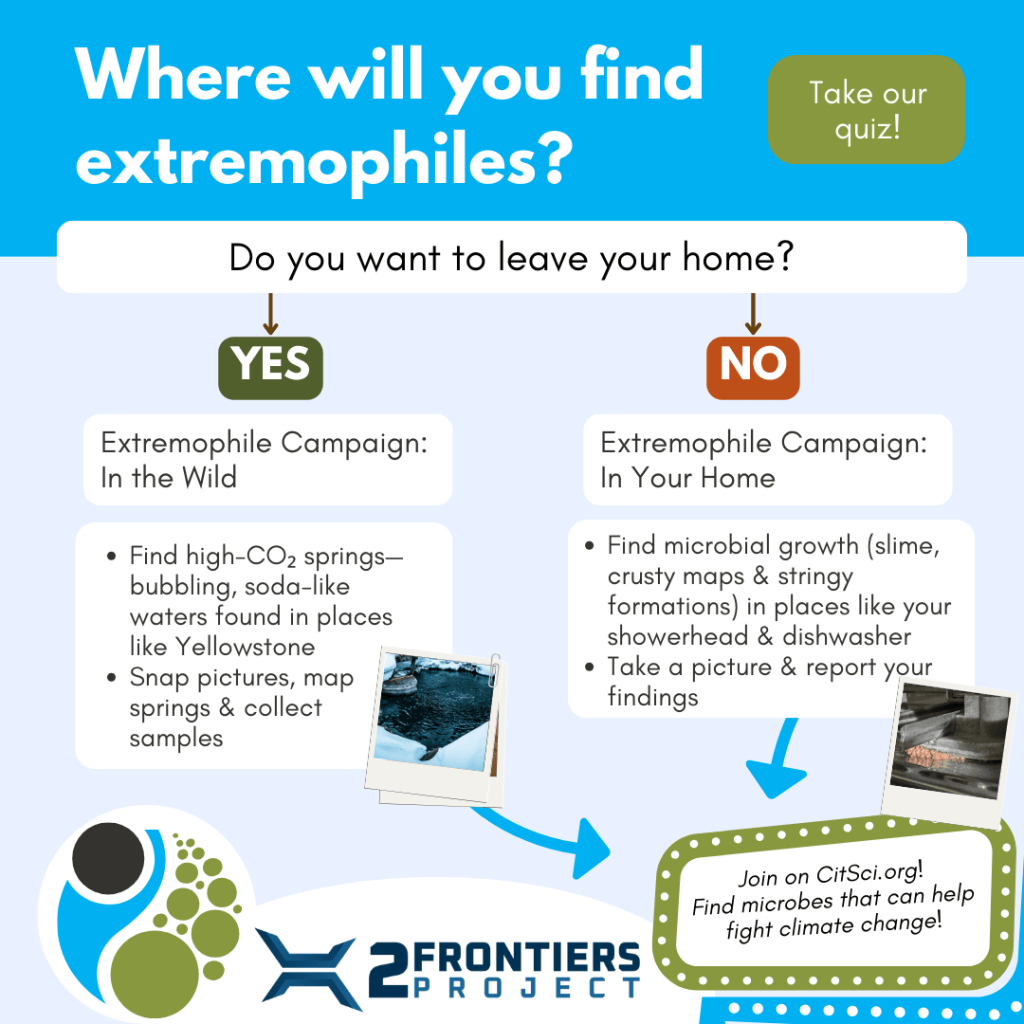
Microbes with extreme powers are all around us—and we need your help to find them! The Extremophile Campaign, led by The Two Frontiers Project and hosted on CitSci, invites you to explore places where these incredible organisms (who do things like eat carbon and might hold the key to addressing climate change) may be thriving.
🔍 In Your Home
Search for microbial life in common household spots, wherever slime can be found, including:


Thanks to Chloe Payne, an undergraduate at Colorado State University, we’ve added a new Water Heater Sampling Guide to help volunteers collect safe, high-quality samples from an under-explored hotspot.
📄 Find the sampling guide on the CitSci resources page
📧 Request a free sampling kit: sarah.newman@colostate.edu
🔗 Join “In Your Home” on CitSci
🏞 In the Wild
You can also find microbes outside your home! Visit bubbling CO₂-rich springs (“soda springs”) or unusual environments in nature—like Yellowstone or the Rocky Mountains—to help researchers document rare extremophiles in wild habitats.
🔗 Join “In the Wild” on CitSci
🌍 Project #2: Leave No Trash
Whether you’re a student, educator, or community member, this is your chance to take action for a cleaner planet—by picking up litter and contributing to research that helps us understand and solve waste problems.
♻️ #LeaveNoTrash Project
This ongoing project from Leave No Trace invites anyone, anywhere to log litter clean-up data using CitSci. By submitting data about what you find and where, you help scientists identify patterns in waste and support global sustainability efforts.
🏫 #LeaveNoTrash University Challenge – April 19–27
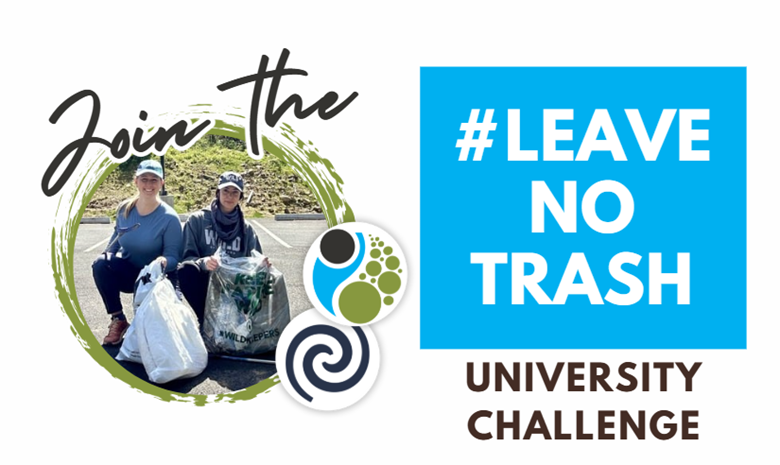
This Earth Month (April 19-27, 2025), CitSci and Leave No Trace are calling on universities worldwide to take action for a cleaner planet! This is a special challenge related to the main #LeaveNoTrash project, but because it’s for university leaders (students, faculty, staff, alumni, community partners, etc), it has a different data form than the main project.


If you’re affiliated with a university in some way, you can participate on your own via CitSci, but we also invite you to lead your community for greater impact.
How to Join:
Sign up to be a leader with Leave No Trace, and then join the page on CitSci


🙌 Why Reporting Your Act Matters
Your participation—whether collecting data or organizing an event—is more than just a good deed. When you report your act:
✅ You help researchers analyze large-scale environmental and biological trends
✅ You contribute to global goals like climate resilience and pollution reduction
✅ You inspire others by showing how everyday people make science happen
Remember, on CitSci, your actions are automatically counted toward One Million Acts of Science. If you join a project elsewhere, you can still participate—just remember to log your contribution on SciStarter.
🌟 Be One in a Million
Science is better when we do it together. This April, make your mark by joining one of our featured projects—or browse CitSci.org for others that match your interests.
Ready to take action? Join a project today and help us hit One Million Acts of Science—together.

 CitSci.org Blog