
 By
By Ever heard the phrase “busy as a beaver”? Turns out, beavers are more than just overachieving rodents with a flair for construction; they’re also ecosystem engineers. And when nature’s little architects are in short supply, humans have to step in with our best imitation – making our own manmade, beaver-like dams (known in the business as “Beaver Dam Analogs,” or BDAs for short) – to save the wetlands that all creatures (including humans) rely on.
My name is Madison Stroker, and I’m an undergraduate at Colorado State University (CSU), studying Ecosystem Science and Sustainability. Last summer, I got to know BDAs firsthand through a unique research project that combined fieldwork, mapping tools, and a little help from citizen science – real science done by nonprofessional volunteers – to help preserve natural ecosystems.
Assembling the Beaver Believers
For my summer 2024 work as an Extension intern, I convened a number of partners to create the “Wetlands for Wildlife” project. Participating organizations included CitSci, a global platform based at CSU for citizen science; Friends of the Lower Blue River (FOLBR), a nonprofit committed to conserving the Lower Blue River Valley; the Office of Engagement and Extension, CSU’s outreach and programmatic arm across the state of Colorado; and Colorado Parks and Wildlife, the state agency responsible for managing Colorado’s natural resources.
Wetlands for Wildlife aimed to identify priority stream sites throughout Summit County that are well-suited for ecological uplift — a term that refers to restoring an ecosystem’s natural functions and resilience.
In this case, uplift means helping degraded streams bounce back by slowing water flow, re-wetting floodplains, and creating better habitat for wildlife. It’s important because healthy wetlands support biodiversity, improve water quality, reduce flood risk, and even help buffer the impacts of wildfires.
In our case, we restored ecological uplift through constructing BDAs. By mimicking beaver activity, BDAs help streams return to their historical flow patterns. They also have the added benefit of inspiring more beavers to inhabit the area by improving the habitat.
Even though beavers play a crucial role in healthy ecosystems, they’re often seen as a nuisance because their dams can flood property or disrupt farmland. That’s why our team proudly called ourselves the “Beaver Believers” and championed beavers as allies in restoration.
Mapping for Impact
To find the best spots for restoration, our team used mapping tools from the Colorado Natural Heritage Program, CSU, and the Beaver Restoration Assessment Tool (a model that helps identify areas where beavers are likely to thrive).
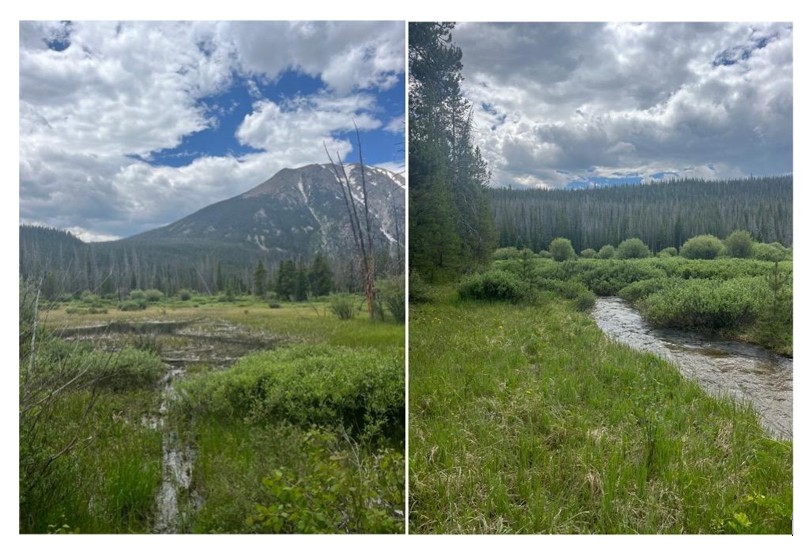
We focused on sites within the Lower Blue River watershed that matched specific criteria for beaver habitat: streams that flow gently (not too steep or fast), run through wide, open valleys, and are surrounded by native plants like willow, aspen, and cottonwood. These conditions are ideal, because they provide the calm water beavers need to build stable dams, along with plenty of nearby vegetation for both food and construction materials.
To ground-truth the maps, we turned to CitSci, which empowered volunteers to observe streams in person and verify whether they matched the habitat criteria. This is important because we needed to ensure the accuracy and reliability of the data represented on the map. Vegetation and streamflow patterns can vary throughout the year, so we had to confirm if there was potential beaver habitat.
I created a simple datasheet to guide volunteer observations, with questions about stream flow, valley shape, and vegetation. Participants also uploaded photos of the streams they visited, helping us better understand conditions on the ground. Their observations are available to view on the CitSci project page.
Citizen Science in Action
Through CitSci, I saw firsthand how powerful citizen science can be. As an undergraduate student, I never anticipated having the opportunity to develop my own real-life science project that would be available to the public and used by scientists. Our volunteers – now proud members of the “Beaver Believers” – helped collect real-world data that we compiled into a report for Colorado Parks and Wildlife.
While the CitSci project is no longer actively monitored by the project managers, we encourage the community to get involved in stream monitoring efforts by taking a look at the events hosted by FOLBR in Summit County for members and visitors to attend. Ongoing data collection can help scientists identify how stream conditions evolve over time in response to climate change and shifts in land use.

CitSci was an essential platform for every stage of this project, from designing the datasheet to organizing and presenting the data. It empowered me to lead a successful citizen science effort that both educated the community about the importance of wetland restoration while producing valuable information for Colorado Parks and Wildlife.
The impact of this project goes beyond community engagement, as the data collected reinforces the value of ecological restoration and long-term conservation efforts.
Project Manager and former Director of Climate Action at FOLBR, Tom Koehler, emphasized the importance of the project when I spoke to him recently. “There is real value in stream assessments for potential ecological uplift including implementing Beaver Dam Analogs,” said Koehler. “The hydrological and biodiversity enhancements are critical for wildlife and as a buffer during wildfires. Forging relationships with academia to cultivate this science from scoping to field verification is very important to further these initiatives across watersheds.”
Citizen science projects clearly bring academia, public servants, citizen scientists, and others together for real community impact.
Reflecting on my experience from last summer, it is clear to me that community members were curious, eager to learn, and deeply motivated to protect the land they call home. From ranch owners to climate activists, everyone shared a common goal: finding a way to coexist with beavers.
However, achieving this balance between beavers and humankind is no easy feat. While the ranchers understood the ecological value of wetland enhancement, they were concerned the additional water, as the result of BDA implementation, would oversaturate their fields. This would negatively influence the nutrient composition of crops and alter harvest times.
Navigating these concerns meant we had to implement a site-specific approach. Every stream presented a unique challenge that required specialized solutions to support human needs and the beavers’ natural habitat, but we prevailed and were able to deliver data to CPW to develop a BDA project design.
I’m incredibly grateful to have shared this experience with the community. Their knowledge and contributions are what made Wetlands for Wildlife truly meaningful, and gave us the ultimate project result of developing strategies to help humans coexist with beavers. This includes low-tech, low-cost, and low-maintenance devices like the BDA.
Want future updates about the project? Visit the Friends of the Lower Blue River website as they work to implement BDAs within their Climate Resiliency Initiative.
About the Author
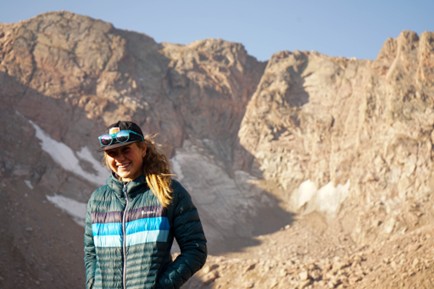
My name is Madison Stroker and I am currently entering my fourth year at Colorado State University as an Ecosystem Science and Sustainability major with a focus in Ecological Restoration. I have had the privilege to work alongside the CitSci team for the past two summers, and I am truly inspired by the power of citizen science and its ability to connect humans with the natural world and generate real change. When I am not working with CitSci or studying, you can find me somewhere in the mountains! My favorite hobbies include backpacking, rock climbing, skiing, and summiting Colorado’s 14ers.

 CitSci.org Blog