
 By
By Welcome to the “Citizen Science for Educators” blog! It’s a long post, meant to be a comprehensive introduction to citizen science for educators (K-12, informal/nonformal, university, and more) of all types.
The table of contents, below, can help you navigate to the part of the post that you need.
- Background/Inspiration
- What is Research?
- What is Citizen Science?
- Citizen Science Data
- Why Do Citizen Science in the Classroom?
- Finding an Existing Citizen Science Project
- Using SciStarter (to find an existing project) & CitSci (to find an existing project or start your own)
- Inspiring Examples of Citizen Science in the Classroom
- The Beginning of Your Citizen Science Story: Worksheet
Background/Inspiration
I’m Caroline, the communications lead at CitSci. I’m writing this because I had the opportunity to connect with a group of dedicated K–12 educators in Miami, FL, and I left feeling deeply inspired.
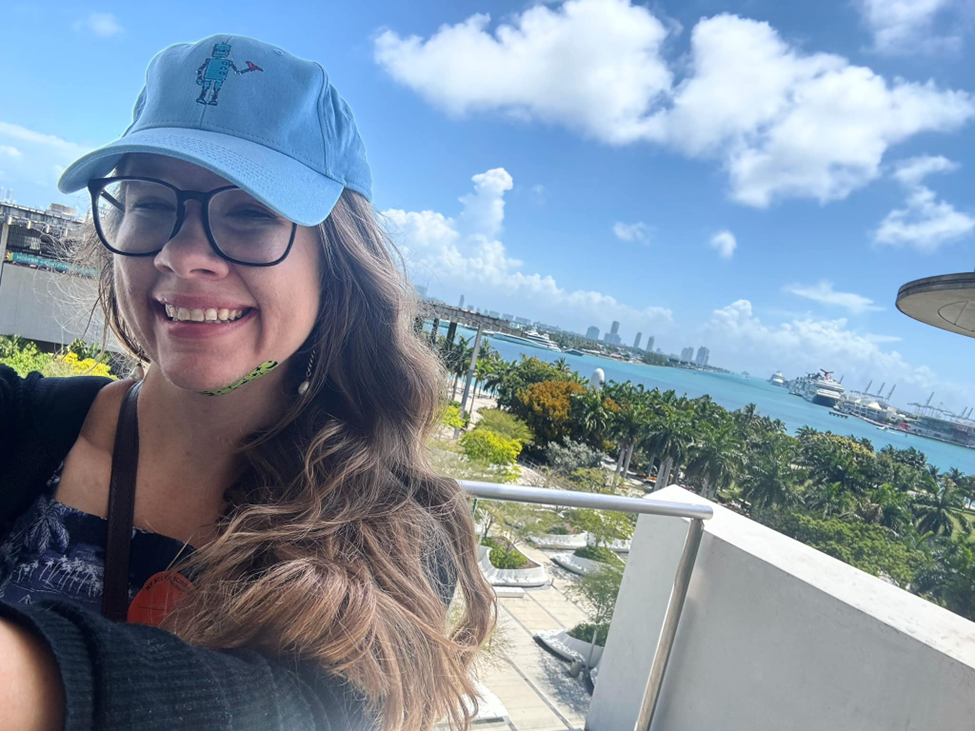
Recently, I spent the day at the Phillip and Patricia Frost Museum of Science, presenting at a professional development training hosted by Dream in Green for Miami-Dade County Public Schools teachers.
The training focused on how educators can engage students in participatory science — real science that anyone can do — through hands-on projects and local investigations. This blog post shares what we discussed, what we learned, and how educators everywhere can begin incorporating citizen science into their work.
Read on for content from that training, with some tips and tricks for educators globally who are curious about integrating citizen science into their work. Whether you’re new to citizen science or looking to take it to the next level, there’s something here for you.
What is Research?
If you’re an educator, you might ask yourself: What is research? In simple terms, research is a systematic way of investigating the world to create new knowledge
And why do research? For a number of reasons:
- Because you are curious or concerned about something!
- Because you want to understand a problem or topic.
- Because you want a foundation built on knowledge to make decisions.
Some people are professional researchers working for universities, nonprofits, governments, or companies, but others are researchers without a special background or even institutional support.
Anyone, from any background, can volunteer to engage in research projects, or even start their own. Anyone can create knowledge! This is often done through citizen science.
What is Citizen Science?
Citizen science goes by a few different names. It can be: community, neighborhood, crowdsourced, participatory, and/or public science.
There are good faith debates out there about what is the best term to use (or what these different terms mean), but a working definition of citizen science for an educator could be: “how any member of the public contributes to scientific discovery, often by collecting, analyzing, or somehow working with data.” And remember, data is just information about the world!
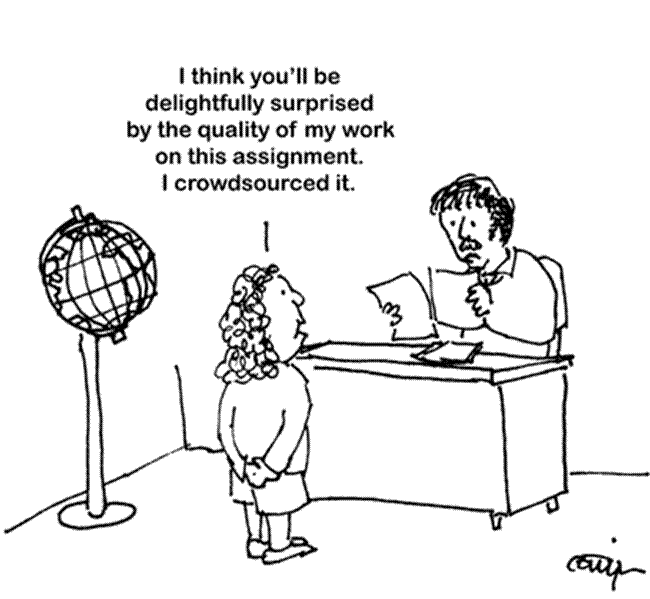
Some citizen science projects are small and local (with only a few people in a certain place participating), but some are big and global. The big projects often rely on crowdsourcing. Crowdsourcing is the “the process of outsourcing tasks to a distributed group of people.”
A lot of citizen science also involves community-based monitoring, described as when “…concerned citizens, government agencies, industry, academia, community groups, and local institutions collaborate to monitor, track, and respond to issues of common community concern.” In other words, many communities use citizen science to pay extra-close attention to an issue that matters to them, like sea-level rise.
In citizen science, participation can range from contractual, where communities commission researchers to conduct studies; contributory, where volunteers primarily collect data; collaborative, where participants may also help refine project design or analyze results; co-created, where scientists and community members jointly design and carry out research; to collegial, where non-credentialed individuals conduct independent research (Bonney et al and Shirk et al really articulate these frameworks well).
Sauermann and Poetz (initially in an article with Franzoni, and then expanded on in their book) developed a helpful model showing how members of the public (including at scale through the lens of crowd science, or with smaller teams) can be involved at any stage of the research process, from identifying questions to analyzing data to sharing results.
But beyond when people participate, Sauermann and Poetz also introduced a framework for understanding how they contribute: the AKRD model.
AKRD stands for:
- Activities – the actual tasks the crowd members/participants perform (like taking photos of wildlife or transcribing historical documents)
- Knowledge – what people know and bring to the project (including lived experience, local expertise, or disciplinary training)
- Resources – what people have access to (like smartphones, tools, transportation, or even funding)
- Decisions – the ability to help shape the project, whether through setting priorities, refining methods, or choosing how results are used
In classrooms, students often contribute through activities (like data collection), but they also bring unique knowledge about their communities, and sometimes make key decisions about what to investigate and why. Understanding these different forms of contribution helps educators create more meaningful, inclusive citizen science experiences, and helps students see themselves as full participants in the scientific process.
The CitSci team often uses a graphic that outlines how different types of citizen science projects fall under different frameworks:

The biggest takeaway from all this is that citizen science makes a difference and advances knowledge.
Because of citizen scientists, we now know (and shout out to Caren Cooper for helping flag some of the outcomes on this list!):
- One-third of bird species are at risk of extinction (Audubon)
- New species of birds, trees, earthworms, and more have been discovered (Australian Geographic)
- 50+ types of bacteria live in your belly button (Dunn Lab)
- The first flowering of 19 species of plants has moved 9 days earlier over the past decade, indicating climate change (Gonsamo et al.)
- There’s a new type of aurora in the night sky (and the citizen scientists named it Steve!) (NOAA)
- There’s another Jupiter-sized planet (TESS)
- Invasive mosquito species have arrived in Germany (Mückenatlas)
- Alzheimer’s research is 6x faster than it would be at Cornell’s Schaffer – Nishimura Lab (Stall Catchers)
Citizen Science Data
Data is information.
- Information = words and pictures (qualitative data)
- Information = numbers and measurements (quantitative data)
Much of citizen science involves the collection and analysis of data. Data collection can be as simple as taking pictures of plants with a smartphone, or as complex as doing a full water quality sample with a kit. Data analysis also can be simple or complex: you can be clicking on blood vessels to find stalls for Alzheimer’s researchers, or you can be solving complex problems yourself to help synthesize RNA-based vaccines.
Anyone can do citizen science by collecting or analyzing data, if they follow the instructions.
It’s up to the researcher making a project to create instructions that facilitate meaningful participation (and mitigate possible data collection or analysis mistakes).
Why Do Citizen Science in the Classroom?

I particularly love the above graphic made by Rachel Polmanteer. There are many reasons to teach citizen science in the classroom, beyond just deepening subject-matter knowledge (though subject-matter knowledge is important!).
So, what can citizen science teach?
- Subject-matter knowledge
- Students explore core science topics (biology, climate, astronomy, etc.) through real-world data collection, deepening their understanding of the curriculum through application.
- Example: GLOBE Observer: Clouds is great for teaching the types of clouds while also collecting data for NASA.
- Data collection and analysis
- Students don’t just read about the scientific method—they live it. They gather, log, and analyze data, practicing critical thinking and learning how scientific knowledge is created and interpreted.
- Example: CitSci includes tools for students to easily analyze data.
- Communication (science-writing)
- Translating observations into reports or public messages builds science communication skills—an essential part of STEM and civic engagement alike.
- Example: Many NC State University students have learned science writing by profiling citizen science projects for different blogs.
- Global citizenship (jumping off point for community action)
- Example: Earth Echo involves students in water quality monitoring to advocate for better community outcomes.
I think the most compelling reason to teach citizen science in the classroom is to foster global citizenship, a concept introduced to me by Kerryane Monahan. She summarized Madeline Green’s global citizenship definition, saying that global citizenship:
- is a choice and way of thinking
- practices cultural empathy
- encourages self awareness and awareness of others
- cultivates principled decision making
- engage politically and socially in their own communities
- Validates interdependence and brings us together.

Here’s a message from Kerryane that ultimately brings this home:
“If the goal is to make the world a better, safe, more peaceful place, we need to encourage and develop global citizenship among students. Engaging in citizen science is one way to develop a number of skills that underpin global citizenship while also addressing the content and skills required of more traditional education programs. Oh, and the kids really love it, because they are effecting positive change in the world.”
I think this quote resonates with Kerryane’s global citizenship message: “If you don’t like the news, go out & make some of your own.” – Wes Nisker’s closing radio salutation in the 1970’s
Citizen science teaches that anyone — especially young people — can contribute to meaningful change. With each data point and observation, they build a knowledge-based foundation that can inform smarter, more inclusive decision-making.
For example, a classroom project documenting sea-level rise in a coastal neighborhood can provide direct, localized evidence for a range of decision makers:
- City planners and zoning officials, who need accurate data to assess flood risks and plan resilient infrastructure
- School boards and district facilities teams, who may need to prepare campuses for future climate impacts
- County emergency management departments, who can incorporate student-collected data into preparedness and evacuation plans
- Local elected officials, like city commissioners or mayors, who can use the data to advocate for state or federal climate adaptation funding
- Environmental agencies, such as state departments of environmental protection or the EPA, which use community-contributed data to validate satellite or sensor data
- Community-based organizations, who can use the findings to engage residents, push for policy change, or inform grant applications
When students see that their work has the power to inform these real-world decisions, it shifts science from an academic subject to a civic tool, and that shift can be transformative.
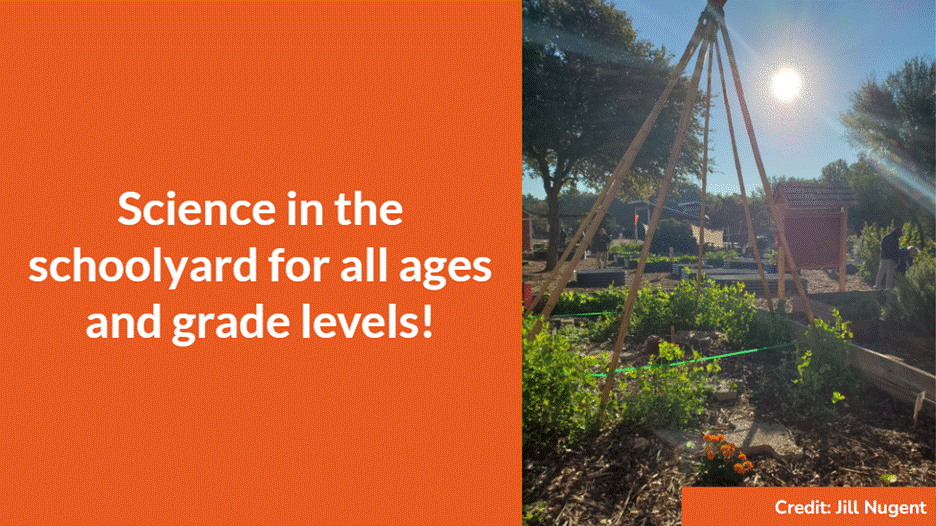
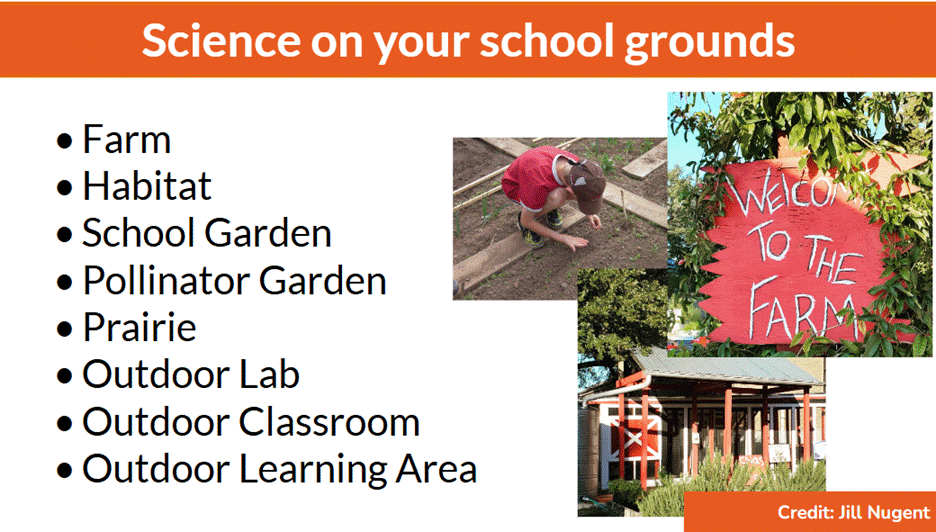
Citizen science is not just for science class! You can work projects into art, English, social sciences, and geography classes. Or outside of the classroom, you can use it to monitor a school garden.
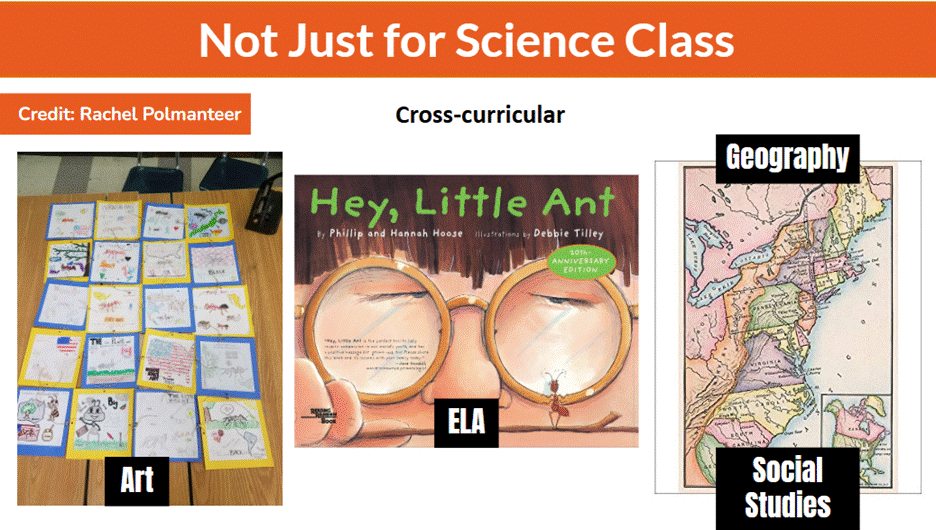
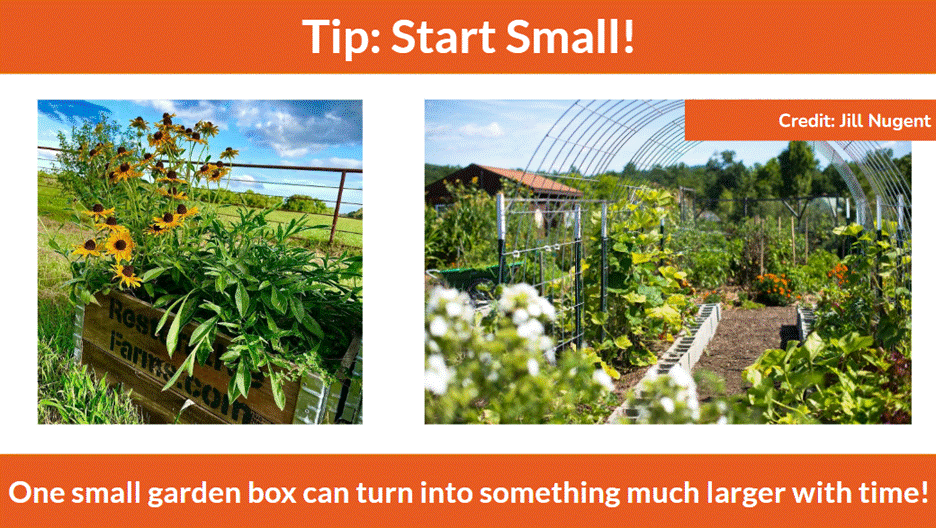
My colleague Jill Nugent transformed my understanding of school garden citizen science. She recommends starting small – perhaps just one window box – to not get overwhelmed. Then, learners can use the garden as an entry-point for long-term longitudinal study: for example, spending the year monitoring pollinators over time, to track ecosystem health.
Finding an Existing Citizen Science Project
You can certainly start your own citizen science project, but before you do, we recommend that you see what’s already out there. There are thousands of local and global citizen science projects in the world, spanning every topic from astronomy to agriculture. Some projects you can do in the field with a smartphone app or a paper datasheet, some are experiment-based (meaning you’re testing a statement that we believe to be true about the world – a hypothesis) or observational (to understand what’s going on in your community), and others are entirely online, involving data analysis, image tagging, or transcription.
With so many choices, it might be difficult to decide on the right project for you or your community. The good news? If a project truly doesn’t exist that offers what you’re looking for, you can start your own, and several platforms make that easy (**cough cough** CitSci! We’ll explain more later in this post).
Here are four trusted places to begin exploring:
- CitSci – CitSci is a website and app where anyone can start, manage, or join a citizen science project. It’s particularly powerful for educators interested in building their own classroom project, collaborating with local scientists, or analyzing existing data. CitSci supports collaborative, community-based science and flexible project design. (We’ll also share tips for using CitSci in classrooms later in this blog post.)
- SciStarter – SciStarter connects volunteers to over 3,000 citizen science projects, events, and tools. Educators can browse projects by topic, age level, or location and access resources (more about those later). SciStarter also partners with NASA, Verizon, libraries, Girl Scouts, and others to offer engaging, standards-aligned content. (We’ll share educator-specific recommendations for SciStarter later in this blog post.)
- Zooniverse – Zooniverse is an online platform for people-powered research. Volunteers can contribute to ongoing projects in fields like astronomy, biology, history, and climate science—usually by analyzing images, transcribing documents, or tagging patterns. It’s a great fit for classrooms with internet access and time for brief, engaging contributions.
- Federal Citizen Science Catalog – Managed by the U.S. General Services Administration, this catalog lists federally supported citizen science and crowdsourcing projects. Many are suitable for classroom participation and align with national science goals.
Using SciStarter (to find an existing project) & CitSci (to find an existing project or start your own)
To summarize above content, there are three steps you can take to immediately engage your learners in citizen science.
- Find an existing project (SciStarter or CitSci)
- Analyze citizen science data (CitSci)
- Create own project (CitSci)
SciStarter
Let’s start with the SciStarter resources. Our first recommendation is to use SciStarter to find an existing project that is a good fit for you and your learners; you don’t want to reinvent the wheel, and ideally you can learn something about your community while also contributing to a bigger global goal by joining an existing project.
SciStarter connects citizen scientists to over 2,000 projects, events, and tools. It’s the world’s largest searchable citizen science database, and it includes projects from all sorts of other platforms, including CitSci and Zooniverse.
You can start with the project finder and search topics that you’re interested in. Make sure you select the “has classroom materials” filter. Not every project has been intentional about designing themselves for people to learn as they participate – and that’s not necessarily a bad thing – but those that do actually have better outcomes.

You can also browse SciStarter’s education page, for special project recommendations from SciStarter’s education team, sorted by suggested age for a learner.
Tip: if you create a SciStarter List, you can keep track of the number of contributions your learners make to SciStarter affiliate projects, if your learners have SciStarter accounts (that means you can grade their participation!).
Some other SciStarter resources that can get you started include:
- The Field Guide to Citizen Science book
- All the trainings
- In higher ed? Pay special attention to that training
- The Ambassador program
- The Girl Scouts program
- NASA programs
- One Million Acts of Science each April
CitSci
After exploring SciStarter, you might be wondering:
- Is there a platform where I can both find citizen science projects and build my own?
- What if my learners want to dive deeper, by analyzing real data or launching an investigation right in our school community?
That’s where CitSci.org comes in.
CitSci is both a website and an app designed for researchers, educators, community groups, and anyone curious about the world around them. It’s a platform where you can:
- Start your own citizen science project
- Join and contribute to existing projects
- Analyze data collected by others
While SciStarter helps you find projects across many platforms (including ones from CitSci), on CitSci, you can not only find projects that people have used CitSci to create, but also create your own project and use free tools to analyze data contributed by the global community (for public projects, or for projects you create).
To get started, we recommend heading over to CitSci’s homepage and creating an account. Then, you can explore featured global projects and other projects that might pertain to your locality.
We wrote a blog post to help you create your first project and datasheet.
Inspiring Examples of Citizen Science in the Classroom
Before you stop reading this post and begin your citizen science journey, take some inspiration from how others have brought citizen science into their classrooms and communities. These three examples show how citizen science can work at any scale—from a classroom garden to a district-wide program.
Trout in the Classroom: Colorado
If you’re wondering what it looks like when someone brings a lifetime of scientific curiosity into the classroom, look no further than Martin Harris, Colorado’s statewide volunteer coordinator for Trout in the Classroom (TIC).

TIC is run by Trout Unlimited, a nonprofit dedicated to wild and native trout and salmon conservation. TIC gives students of all ages a chance to raise Salmonids in a classroom setting and then release them into a nearby stream or river.
Every state has their own TIC program, and Martin has been instrumental in stewarding Colorado’s.
With a doctorate in zoology and a background studying microcrustaceans, Martin pivoted into computer modeling and IT, but never stopped being a teacher at heart. A few years ago, he began volunteering with TIC. Now, he supports more than 80 tanks across 60+ schools statewide, connecting students to hands-on aquatic science education.
Through in-person visits, online office hours, and a robust digital infrastructure, Martin helps educators and students engage in real-world research. He also guides teachers through every step—from setting up equipment to reporting data. Thanks to his leadership, students are contributing to a large shared dataset on water quality, fish growth, and tank conditions, hosted on CitSci.org.
Students measure metrics like temperature, ammonia, pH, fish count, and size, learning to think like scientists while helping monitor healthy trout ecosystems. The TIC datasheets show impressive participation: over 1,500 entries for fish size and 1,000 water change logs, turning classroom tanks into collaborative science labs.
Teachers in the United States can get started with Trout in the Classroom today.
The Citizen Scientist Project: Teachers as Fellows and Leaders
At California State University, Bakersfield, the Citizen Scientist Project equipped educators to lead inquiry-based projects rooted in community needs. Its Teaching Fellows Program offered K–12 and college educators:
- A $2,500 stipend
- A scientist mentor
- Time and resources to create or adapt a classroom-based citizen science project
- A final public teaching event to share what they’ve built
One Teaching Fellow, Amy Downs, created a project focused on the Asian citrus psyllid, an invasive pest threatening citrus crops. Her students studied the issue and learned about its impact on agriculture and biodiversity.
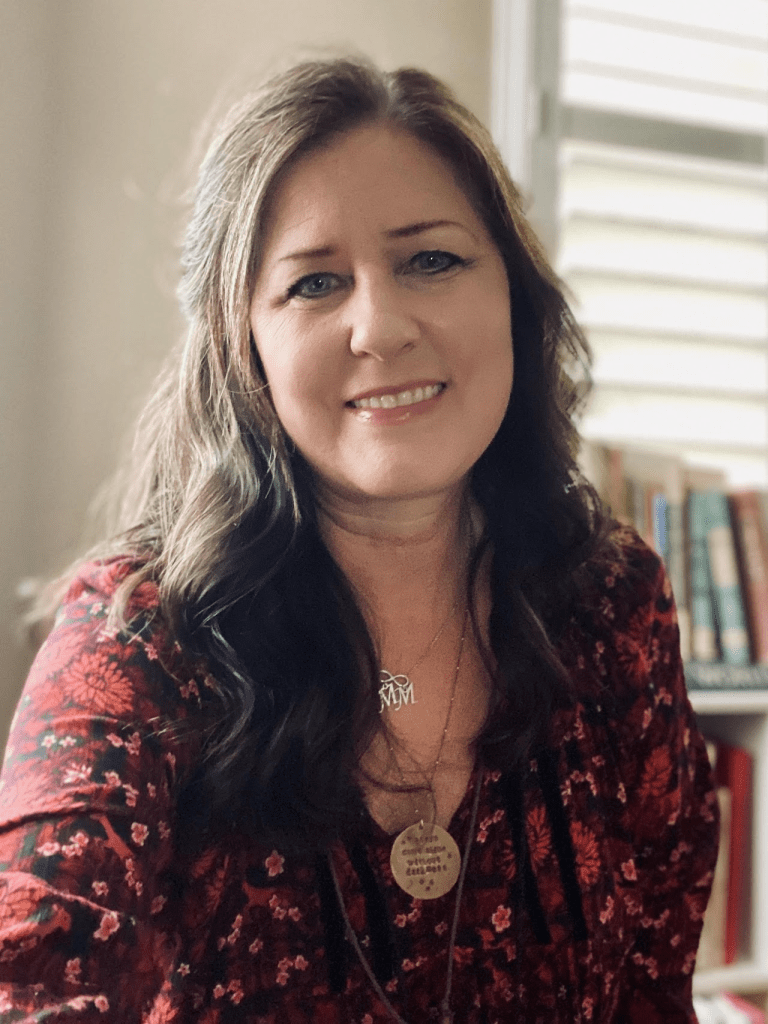
Amy shared:
“I want to be a Citizen Scientist Teaching Fellow because it allows all of us to contribute to a scientific community. Science is a collective and collaborative effort. I know that we can get kids to think and problem-solve problems in our community. This project is personal and special to me. I grew up on a farm in Kern County. My dad was a cotton farmer. I have known about invasive species and the impact it can have on our agriculture for as long as I can remember.”
Amy’s story is a powerful reminder that citizen science helps students connect personal experience with global challenges and become problem-solvers in their own communities.
Broward County Public Schools: District-Wide Impact with SciStarter
In southeast Florida, Broward County Public Schools led the way by integrating citizen science directly into curriculum in a five-year partnership with SciStarter.

With SciStarter’s help, teachers:
- Assigned citizen science projects as graded assignments
- Accessed curated projects by grade and subject
- Customized instructions and track participation
- Even guided students to create their own projects using built-in templates
Teachers received training through workshops, like the one held on National Squirrel Day!—to practice using tools and engaging in citizen science projects. These workshops also helped educators map projects to subjects like science, English, and math.
The result? A growing network of teachers and students using citizen science to tackle real questions and explore data in ways that connect with their curriculum and their communities.
The Beginning of Your Citizen Science Story: Worksheet
These stories show what’s possible when educators say yes to curiosity, collaboration, and real-world learning. Whether you’re planting grains, monitoring insects, or tracking clouds with your students, citizen science can transform your classroom into a living lab, and your students into changemakers.
So what question will your class ask? What project will you create? We can’t wait to find out.
Feel free to use this worksheet to start your brainstorm:
Please email success stories, reach out with any questions or just to brainstorm, or even feel free to just say hello by emailing admin@citsci.org.

 CitSci.org Blog