
 By
By Thank you again for joining us for this quick guide series!
Part one covered research questions and big picture planning.
Part two covered design, data collection, and volunteer management.
Part three (this post) covers results and follow-up.
Once you’ve collected some data, you may ask yourself: is this result meaningful? Is it meaningful enough to write a post bragging about my result on the CitSci blog? Should I publish a paper in a scientific journal?
As you think through the answers to these questions, start thinking about your sample. Sample size matters, especially for hypothesis-driven projects! That being said, what counts as “meaningful” can vary greatly depending on the goals of a project. For example, during the Extremophile Campaign: In Your Home, success was defined by collecting samples from a wide range of unique locations in and around people’s homes. The emphasis was on variety rather than the total number of samples.
In contrast, other projects may prioritize metrics like the number of participants or the geographic spread of contributions. A project like Leave No Trash, for instance, might aim to engage a specific number of people across diverse regions, in order to understand global patterns of trash. Meaningful impact isn’t one-size-fits-all.
For many projects, to detect a meaningful pattern, you’ll need enough observations to draw conclusions. A handful of short observations won’t cut it. For a hypothesis-driven project, the more volunteers involved, and the more repeated observations at each site at a standard time, the more reliable your results will be.
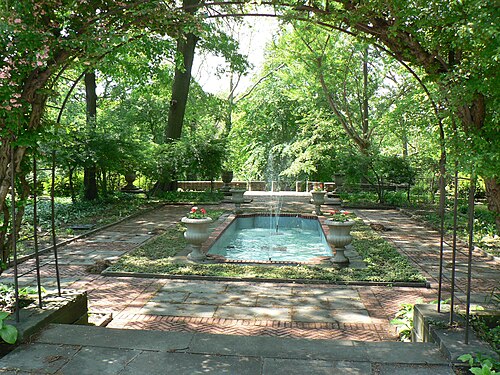
For the “Cleveland garden” example from part two, we would recommend aiming for at least 30 independent observations per plant type to start seeing trends with confidence (we won’t bore you with the details, but the statisticians say that at least 30 observations gets you closer to a normal distribution for statistics calculated from the data. Once again, don’t worry if you don’t understand what this means, your friendly neighborhood data science undergrad can help).
Using CitSci’s Tools to Visualize Your Results
You’ve collected your data, engaged your community, tested your hypothesis, and started to see some trends. Now, it’s time to make those results make sense.
Whether you’re planning to publish, present, or just share your findings with your neighbors, data visualization is how you bring your project to life. It’s also how you communicate what you learned in a way that others can understand, use, and act on.
The good news? You don’t have to start from scratch. CitSci has built-in analysis and visualization tools to help you move from messy spreadsheets to clear graphs, maps, and summaries. In fact, we break it all down in our blog post, How to Transform Data to Communicable Results, which we recommend reading in full. But here’s a quick primer to get you started.
Most citizen science projects collect both:
⬤ Quantitative data (numbers): e.g., inches of rainfall, number of birds observed, water pH.
⬤ Qualitative data (words): e.g., tree condition described as “Excellent,” or photo uploads.
CitSci’s visualization tools are designed to help you analyze and display quantitative data—the stuff you can chart, measure, and run basic stats on–as well as location data. However, in the results tab, you can also see summary statistics related to your datasheet. We recommend looking at these first; these are simple numbers that help describe your dataset and give you a first sense of what’s going on:
⬤ Mean (Average): Add up all your values, then divide by how many you have. For example, if five people each counted 10 bees, the mean would be 10. If some people counted as few as 2 and others as many as 20, the mean could between 2 and 20.
⬤ Minimum and Maximum: The lowest and highest numbers in your dataset. These help you understand the range of your data — what the extremes are.
⬤ Standard Deviation: This tells you how “spread out” your data is. A small standard deviation means most values are close to the average; a big one means your data points are more scattered. It’s helpful for understanding how precise your results are.
⬤ Number of Samples: This is how many observations or measurements you have. The bigger the sample size, the more confident you can be in your results. (Remember: aim for at least 30 observations if you want to start seeing meaningful trends.)
Depending on your project, you can also visualize the following (based on how your datasheet is structured and what questions you asked) (reminder, all of these are featured in the blog; read the longer blog post for a comprehensive overview):
⬤ Maps: Visualize where your data came from. See site coverage, detect geographic trends, or identify sampling gaps. For example, in the Southwest Exotic Mapping Program, maps helped show where most observations were concentrated. Find the Map feature on a homepage of a project.
⬤ Bar Charts: Great for comparing data across categories. Want to compare air temperature across sites or seasons? A bar chart can show how many times a given temperature range was recorded, like Utah Water Watch did with their climate data. Find this in your project’s results tab.
⬤ Pie charts: Good for representing data such as percents/proportions that add up to 100%. Automatically visualize data for categorical questions in pie charts. Go to results, then select datasheet, and scroll down for each question. If question is categorical, see dynamic pie chart.
⬤ Line Graphs: Ideal for time series. These show how something changes over time, like how water temperature trends across months or years. Find this in your project’s analyses tab.
As we shared in our blog post on Results-based Citizen Science, your findings only matter if others can understand and use them. Visualizing your results helps:
⬤ Volunteers stay engaged by seeing the impact of their work
⬤ Decision-makers and partners act on your findings
⬤ You reflect on whether you answered your research question and what to explore next
So don’t let your results sit in a spreadsheet. Tap into the tools already available to you on CitSci.org, and bring your data to life.
If you get stuck, we’re always here to help. And remember: you don’t need a degree in statistics to get started (or even the help of a data science undergrad). Even basic graphs can spark meaningful insights, action, and conversation.
Ready to dive in? Log in to your project dashboard on CitSci.org, and start exploring your data.
Who are Your Results For?
Once you’ve collected your data and run some initial analyses, it’s time to ask the most important question: so what? What do your results mean, and how can they be used to inform decisions, spark change, or deepen understanding?
We have a whole blog post on the topic of making your results matter, but in a nutshell, when citizen science projects are thoughtfully designed, they don’t just generate data; they produce results that are relevant to the future of communities, scientists, and decision-makers.
Maybe you want your findings to help city planners enhance quality of life through greenspaces: by knowing what areas of extreme heat there are, they can plant trees to mitigate that heat. Maybe you’re hoping to raise awareness about a local issue, like flooding or invasive species, so community leaders can have evidence to justify investment to solve these problems. Or maybe your data are contributing to a larger database to inform national research on climate change.
Regardless of your goal, your results deserve to be seen and used.
Once again, we have a full blog post on this topic — Results-based Citizen Science — but here’s the takeaway: results don’t happen by accident. You can only trust your results when you design your project well.
This means:
⬤ Thinking early about who might use your data (city officials? researchers? neighbors?)
⬤ Standardizing your data where possible, so it can be combined with larger efforts
⬤ Planning a way to share your results through reports, maps, stories, or even art
Need inspiration? In the Catch the Hatch project (detailed in our longer blog post), local anglers tracked mayfly emergence using a protocol that connected their observations to national datasets. The project had both local and national impact, and the anglers got better at fishing. Now that’s a win-win.
So ask yourself: what impact will your results have?
And if you’re not sure how to turn your observations into outcomes, don’t worry. We’re here to help. Reach out anytime: we’ve worked with over 1,000 citizen science projects, and we’d love to help you design one that leads to real-world results.


