
 By
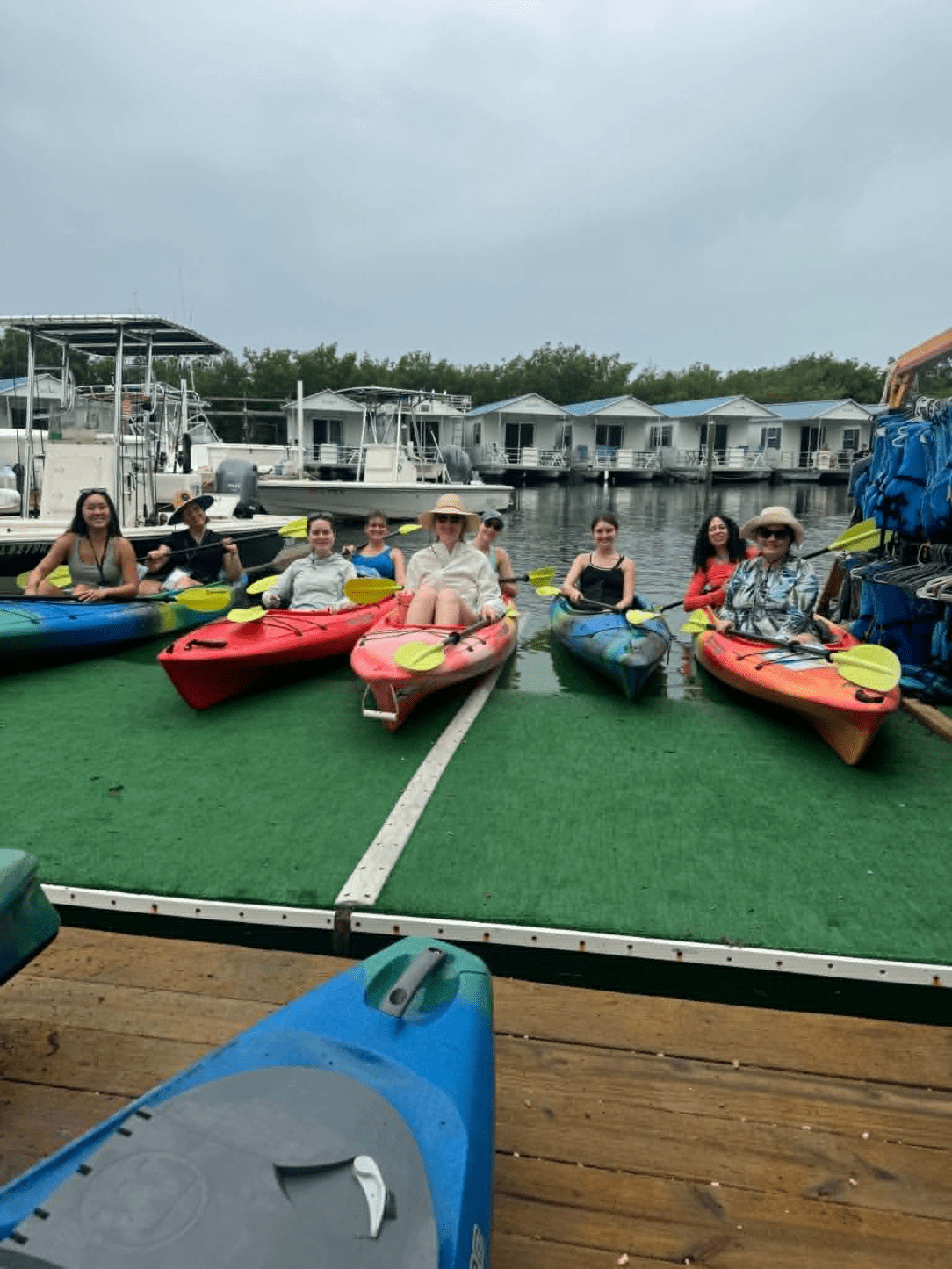
By For my birthday this year, I asked eight of my friends to join me in Key West, Florida on a citizen science kayaking excursion.
Our task? Document where seagrass is (and isn’t) growing so a collaborative team at the University of Tennessee: Dr. Hannah Herrero, the University of Florida: Dr. Jason Blackburn and Dr. Di Yang, and Southwestern University: Dr. Stephanie Insalaco-Wyner, can understand how seagrass coverage changes over time.
The researchers needed citizen science volunteer help collecting data in Key West to complement data already gathered by the professional team in the Upper Keys.
The data help train satellite-mapping models that track seagrass over time.Seagrass is worth tracking: it stores carbon, filters the water, and feeds and shelters everything from fish to manatees.
My name is Dr. Caroline Nickerson, and I spend my days helping people around the world participate in citizen science – real science that anyone can do. I serve as CitSci’s communications lead. CitSci is a global platform, hosted by Colorado State University, for anyone to start or join a citizen science project.
I wanted to engage my friends in citizen science for my birthday. I knew Hannah needed help because of our mutual friends. So, we decided to pop up a weekend-long project on CitSci (with the idea to expand it later on to fuller, longer-term participatory effort – in the next year or so).
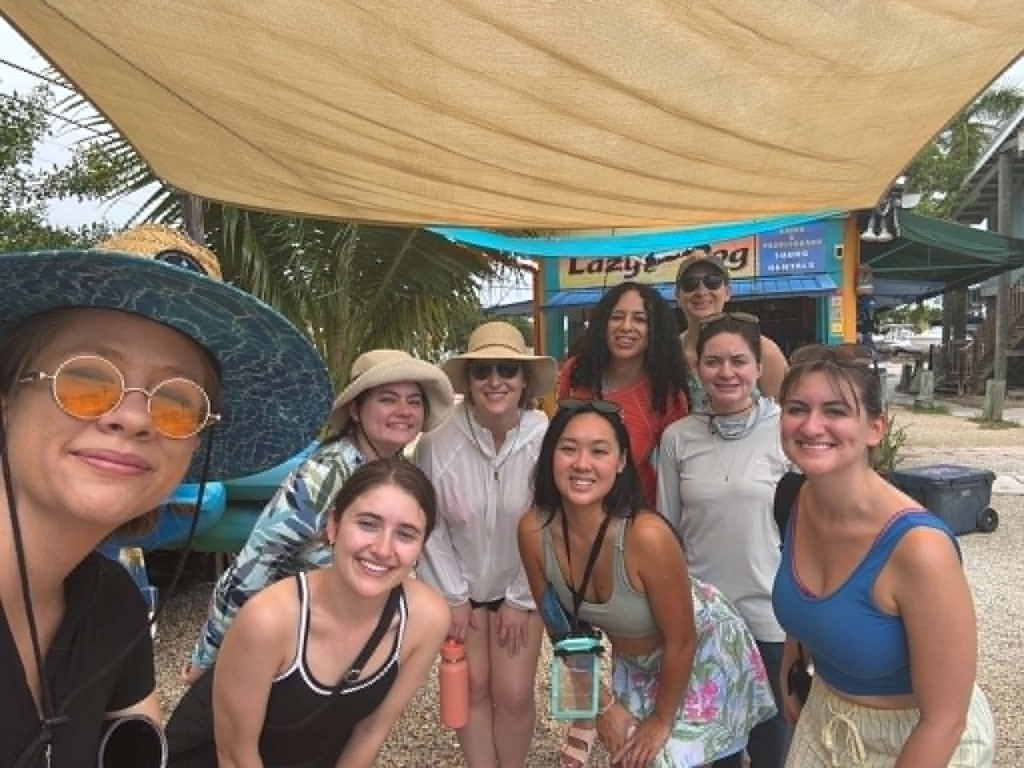
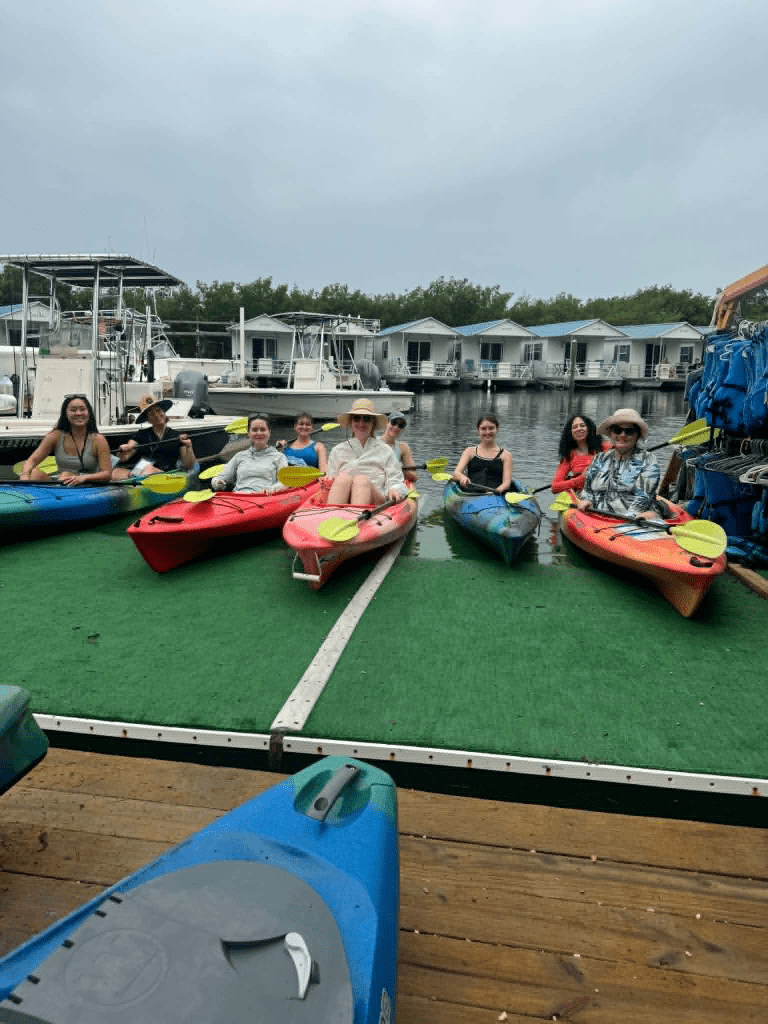
Pictured: My friends and I, ready to collect data!
Our discoveries
We logged 47 observations in one morning via the CitSci app. I made a CitSci project, screenshotted below, for our weekend of data collection:
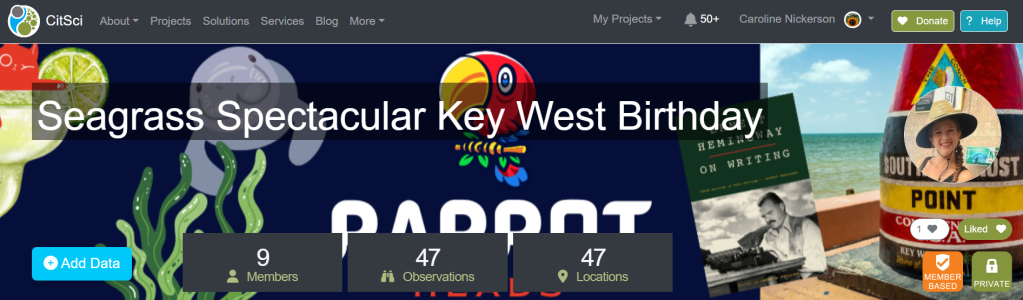
We logged 47 observations in one morning, and almost all of them had seagrass: 45 yes, 1 no, 1 unsure. About half the grassy spots were solid cover and about half were scattered clumps.
Most of what we saw was thick rather than sparse, which is a good sign. Thick, dense seagrass usually means a healthy bed: it’s storing more carbon, filtering more water, and giving more fish and turtles a place to live than a thin, patchy one would.
Sparse spots can be a bed that’s just getting started, or one that’s thinning out from stress, so both are worth recording. We usually couldn’t tell the species through the moving water, so we marked “unsure” most of the time, but where we could guess, turtle grass came up most.
We surveyed only a small part of the Keys, and our route was not designed to represent the region as a whole. We intentionally visited areas that state mapping efforts previously identified as seagrass habitat so we could verify conditions on the ground.
Because of this, our observations are biased toward places where seagrass was expected to occur, making it unsurprising that we encountered it so often. In geography, where you sample matters just as much as what you find. However, it is reassuring to know that these seagrass beds haven’t disappeared since state mapping efforts last documented them.
The health and abundance of seagrass elsewhere in the Keys may be very different. Rather than demonstrating that seagrass is thriving across the region, these observations contribute one small piece of a much larger effort to improve satellite-based maps and track seagrass change across space and time.
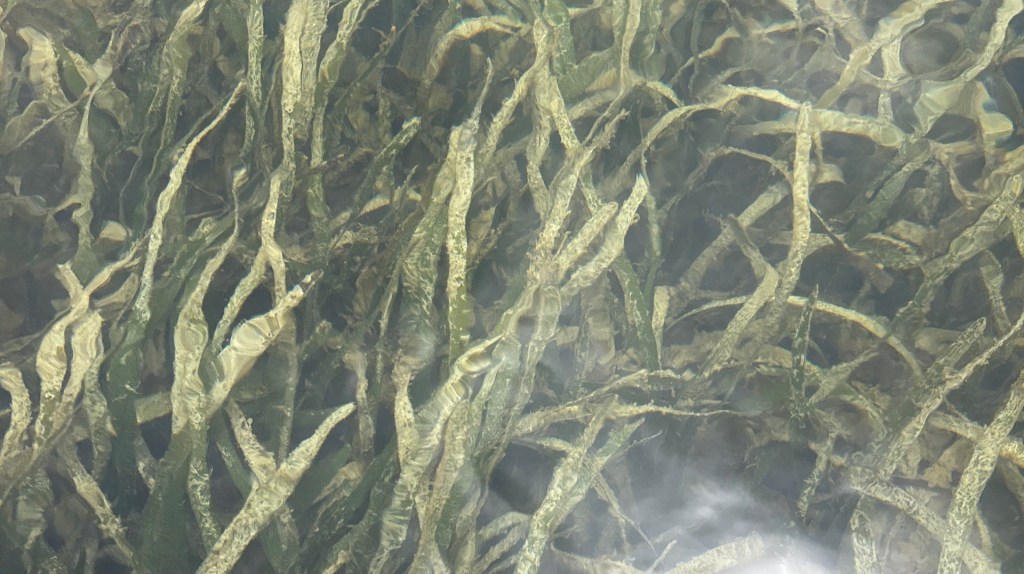
Pictured: one of the photos we submitted
How you can use CitSci
You do not need a birthday and eight friends (though those are always nice things!) to do great science. If you have a question about your own community, CitSci gives you the tools to answer it, whether you’re putting together a one-time data collection event, a pilot test project, or a longer-term monitoring and/or scientific effort.
You can design your own datasheet, so you ask exactly what your research needs, or you can do what I did and partner with awesome researchers who need your help collecting data, and they can help you design a data collection effort that fits their research needs, making it almost certain that your data will be useful and used.
On CitSci, you can keep a project small and hyperlocal, or open it to the whole world. Plus, it’s easy to set it up!
If you’re interested in setting up a project, CitSci hasa Quick Guide series that walks through the entire process, from picking a research question, to designing your datasheet, to making your results matter. Start here!
A poem from Gloria
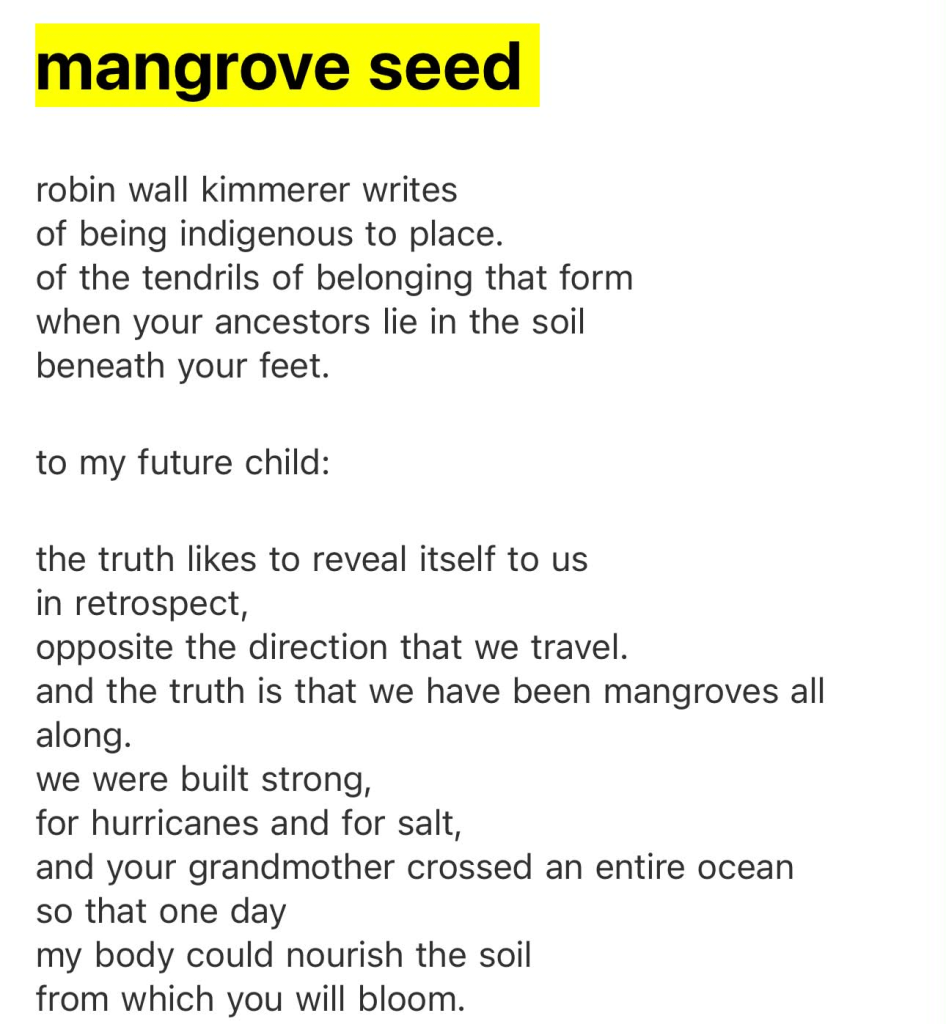
While we kayaked around the mangroves together, my friend Gloria read the below poem she had written to me. I think it’s a beautiful way to close this blog post.
Thank you
To the eight friends who spent a Key West morning gazing at seagrass: thank you. You turned a birthday into real habitat data. The full dataset is on its way to the research team.
If this blog made you want to get involved in citizen science, that’s the point. Go do it: citsci.org.
In the next year or so, the research team we helped is hoping to create a broader citizen science project featuring seagrass that more people can join. Sign up for the EMERGE partner newsletter to be the first to know about their updates.


