
 By
By Hello, CitSci community!
This summer has had us out in the world and back at our desks in equal measure.
In this newsletter, we’re featuring new functionality on the Observations page to make sorting and exploring your data easier, sharing how CitSci marched down the street in a Fourth of July parade that landed on C-SPAN, inviting you to an in-person event in Greeley, Colorado, and asking what you’d want from a hands-on CitSci workshop.
We also have the story of a volunteer who built a machine learning tool to help a NASA project spot rare clouds, plus an alumni spotlight on a Beaver Believer turned graduate researcher.
It’s been a great summer for CitSci. Thanks for being part of it. Let’s make this fall our best yet!
How and Where to View Observation Details on CitSci
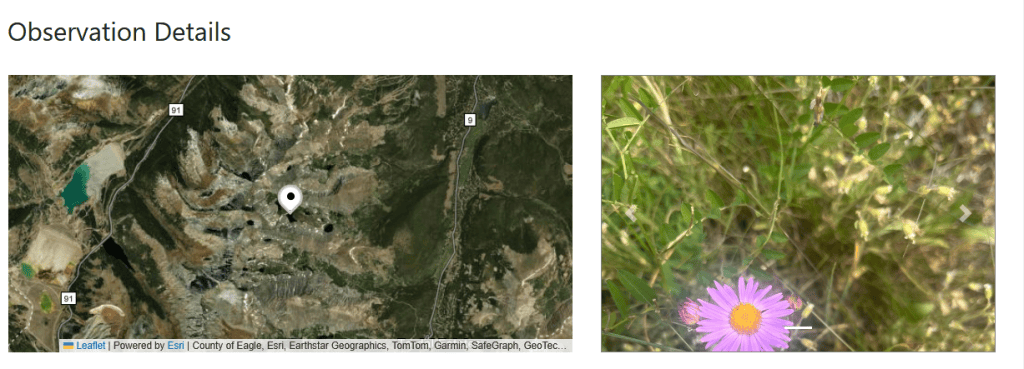
Ever wish you could quickly sort, filter, and view the observations on your CitSci project? Well, now you can! We recently released a number of new features to the Observations page to make viewing and exploring observations easier than ever.
Quickly view Observation details in a modal without leaving the observation page, select an observation in Map view and immediately see the observation details, and so much more.
Your Voice, Your Workshop: What Would Help You Most?

We’re thinking about hosting a hands-on workshop built by and for the CitSci community, possibly alongside the Association for Advancing Participatory Sciences (AAPS) conference in May 2027. Before we plan anything, we want to hear from you, and so you are cordially invited to a online CitSci meeting!
This session is a conversation about what would actually help you, whether that’s swapping stories, building skills, or trying out feature ideas. What you tell us will show how much interest there is and how to make a future workshop worth your time and easier to attend.
Come if you run a project on CitSci or are thinking about starting one. Come if you just want a say in how we build resources for our community.
📅 Friday, August 28, 2:00 PM MT
🎤 Sarah Newman, Director of CitSci Project Management and Operations
🎤 Greg Newman, Director of CitSci, Lead Scientist for Global Food, Water, and Citizen Science Systems – International Agriculture
CitSci, in the Community
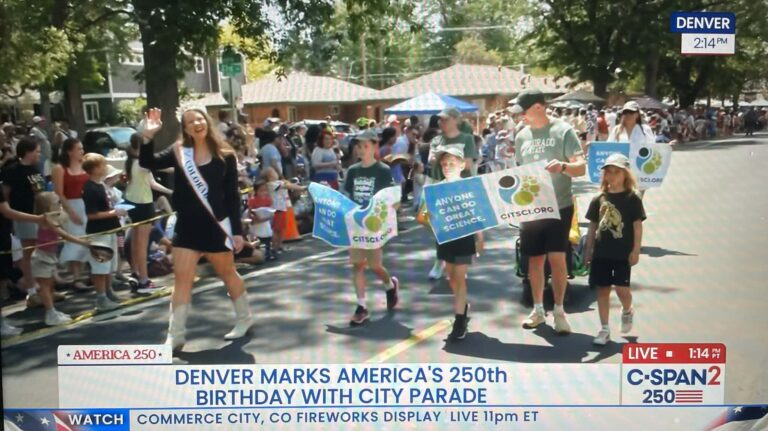
This Fourth of July, citizen science marched down the street. CSU and CitSci joined Denver’s 16th annual Park Hill Fourth of July Parade to bring participatory science to the neighborhood.
Caroline Nickerson, a communications specialist with CSU’s Natural Resource Ecology Laboratory and CitSci, led the group as Ms. Doctorate Colorado 2026. Her platform for the year is citizen science: research that anyone can join. She was joined by CSU faculty, staff, students, alumni, and families, who carried signs, waved to the crowd, and talked with attendees about how to take part in real research.
C-SPAN featured the parade in its Independence Day coverage, bringing the Park Hill tradition and CitSci’s message to viewers across the country.
Caroline is continuing to take that message across Colorado. On September 19, she’ll be at YES!fest, the Youth Engineering and Science Festival at the LINC Library Innovation Center in Greeley, Colorado. The family-friendly festival brings together science and engineering organizations for hands-on activities, demonstrations, and opportunities for kids and families to explore how science and engineering can help solve real-world problems.
For her Ms. Doctorate Colorado platform, Caroline is spotlighting three CitSci projects, each open to anyone:
- Leave No Trash: Turn park, trail, neighborhood, and campus cleanups into litter data that helps communities understand and prevent litter, not just clean it up.
- Space Cloud Watch: Watch summer skies for rare, electric-blue noctilucent clouds and help researchers track a phenomenon satellites alone cannot fully capture.
- The 2FP Resilient Soils Project: Help document soil health and the land stewardship practices that protect it.
Whether she’s marching through Denver or talking with families in Greeley, Caroline is sharing the same message: you don’t have to be a professional scientist to contribute to science.
How a Citizen Scientist Built Tools for NASA
This is some citizen science news worth sharing!
Space Cloud Watch, a NASA-supported project on CitSci, asks people to photograph noctilucent clouds: rare, high-altitude clouds that glow silver after sunset and before dawn. They’re showing up more often and lower in the sky, and scientists want to know why.
The catch is they’re easy to confuse with ordinary clouds, so project leaders were verifying a lot of submissions by hand.
Volunteer Namai Chandra fixed that. He built a machine learning tool that pre-screens images and routes the uncertain ones to human review. He trained it on real noctilucent clouds and their look-alikes, worked with the project scientists, and released it after several rounds of testing. Now anyone unsure about a photo can check before they share.
This is why we believe in participatory science. Volunteers can solve real problems and make science better. Hats off to Namai and the Space Cloud Watch team!
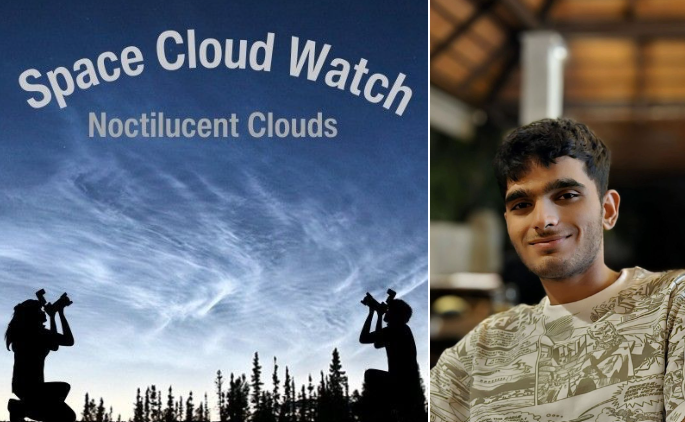
Pictured: (1) Space Cloud Watch project graphic and (2) Namai Chandra, Space Cloud Watch volunteer and creator of the Noctilucent Cloud Detector tool. Photo by Surabhi Chandra, via NASA.
How a Beaver Believer Became a Graduate Researcher
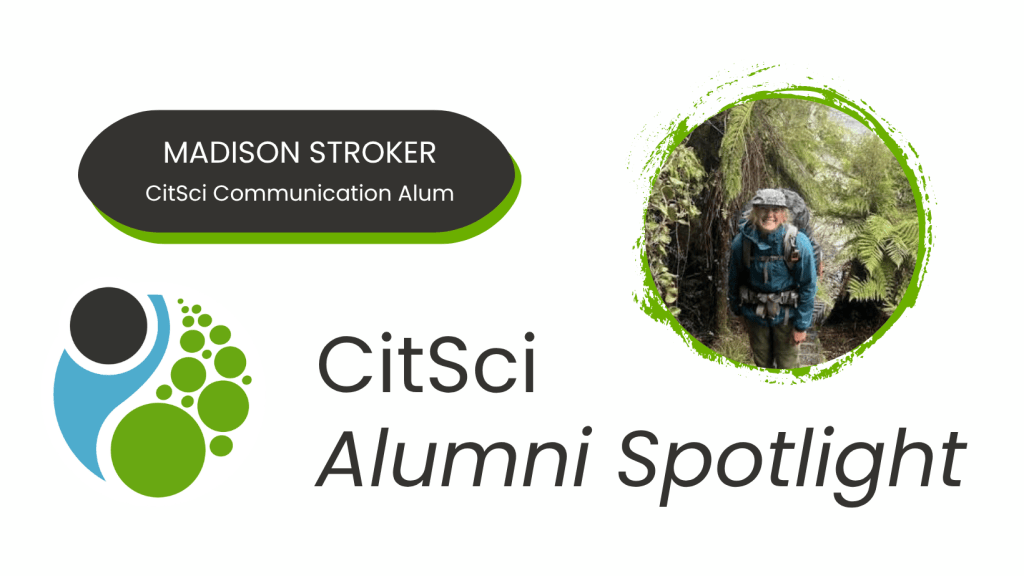
Meet CitSci alum Madison Stroker, whose work on the platform is growing into a career focused on sustainability and community-driven science.
Madison found citizen science as a sophomore at Colorado State, after a guest lecture from CitSci director Greg Newman. She went on to convene the Wetlands for Wildlife project, where volunteers who called themselves the “Beaver Believers” ground-truthed maps of potential beaver habitat in Summit County.
Now heading into a master’s in Ecosystem Science and Sustainability at CSU, Madison wants to work in the space between researchers and communities to build solutions shaped for each community’s needs.
What’s Next?
What else can we build? That’s up to you!
Wth your support, we can keep creating tools by and for the community—ensuring that everyone has the power to do science that matters.
Donate today to support new features for participatory science.


