
 By
By Madison Stroker found citizen science in a classroom. As a sophomore studying Ecosystem Science and Sustainability at Colorado State University (CSU), she sat in on a guest lecture by CitSci director Greg Newman, who introduced the class to CitSci and the idea that anyone can take part in real scientific research.
Madison had never heard of citizen science before, but it clicked right away. Her life goal is to build sustainable solutions and respond to climate change, and she immediately realized that citizen science could make that a whole-community effort.
She introduced herself, and soon Greg became her mentor and she started working with CitSci.
CitSci is a global citizen science platform, hosted at CSU, that gives people the tools to create projects, collect and visualize data, and connect with participants around the world.
One of Madison’s first projects put her straight into the field. During a summer Extension internship, she convened partners to create the Wetlands for Wildlife project, working with Friends of the Lower Blue River, CSU’s Office of Engagement and Extension, and Colorado Parks and Wildlife to find priority stream sites in Summit County suited for restoration using beaver dam analogs.
She used mapping tools to identify likely beaver habitat, then turned to CitSci to ground-truth those maps: volunteers, who proudly called themselves the “Beaver Believers,” observed streams in person and uploaded photos to verify vegetation, streamflow, and valley shape. The data went into a report for Colorado Parks and Wildlife.
“We used citizen science to go out and monitor these wetlands for things like vegetation, streamflow, and stream gradient to help determine whether the area was suitable for beavers,” said Madison.
A Passion Rooted Outdoors
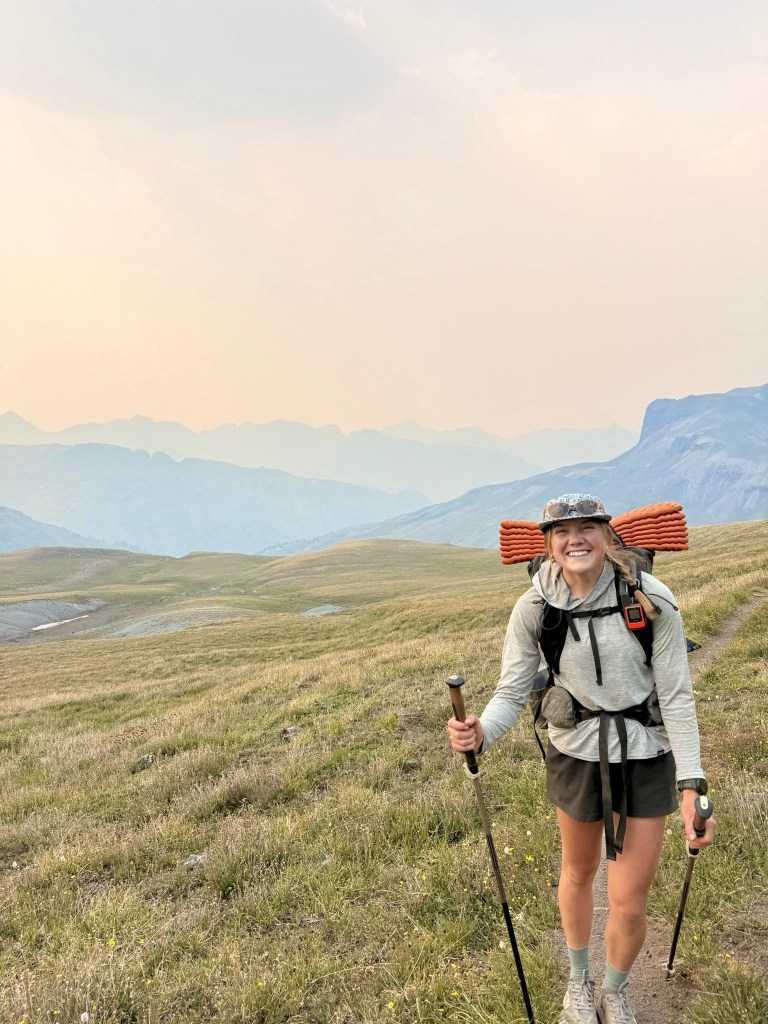
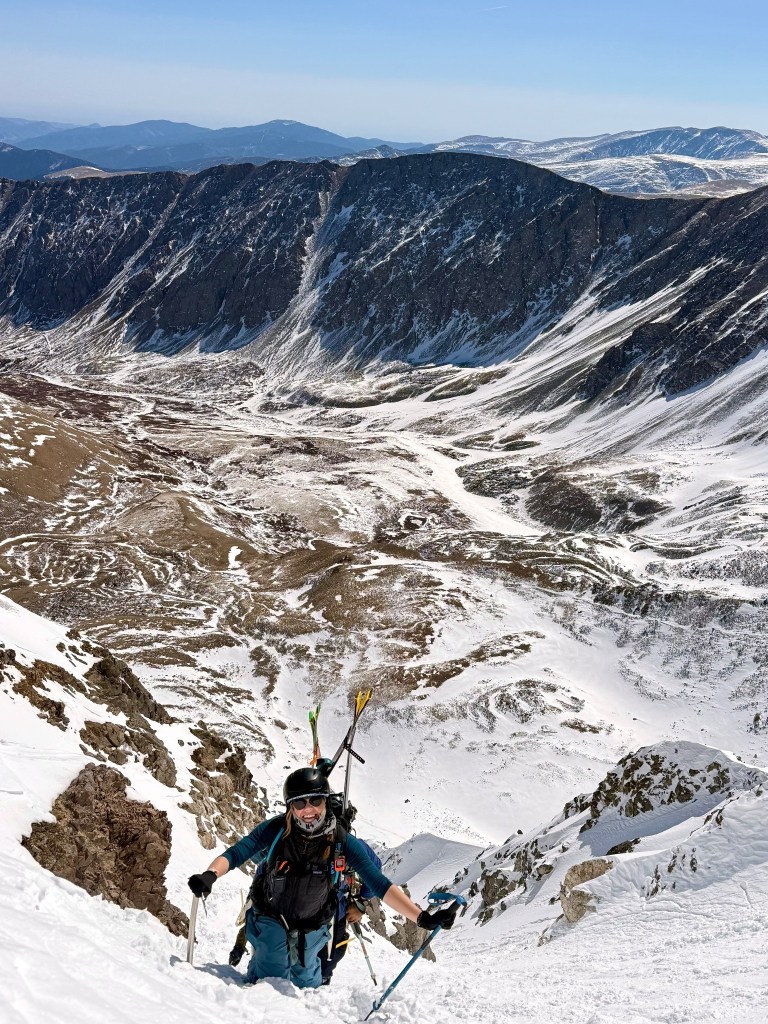
Madison grew up in the Chicago area and moved to Colorado for college, where the mountains quickly became both her classroom and her motivation. She skis, backpacks, rock climbs, summits Colorado’s 14ers, and follows a plant-based diet. She recently completed a monthlong thru-hike of the Colorado Trail, an experience that left her wanting to take on more long-distance hikes.
She has also traveled widely, studying abroad in New Zealand and visiting Indonesia and Thailand, trips that opened her eyes to working on environmental issues around the world.
That time outside is exactly why she wants to protect it. Over a summer on the trail, she hiked through wildfire smoke, woke up to ash on her tent, and watched water grow scarce.
“Getting outside has really inspired me to want to protect the environment more,” said Madison. “I get to live in Breckenridge, and I see climate change impacts happening around us. Fires have been a huge problem this summer. I want to keep being able to recreate in these spaces, so it’s really inspired me to protect them.”
Science That Belongs to Everyone
Working at CitSci gave Madison a look behind the scenes. She handled help requests and user support, which meant talking with participants and learning about projects happening across the country and around the world.
She also wrote for the CitSci blog, including alumni spotlights on three former CitSci team members whose careers had carried citizen science into new fields: Dani Lin Hunter, Ellen Eisenbeis, and Danielle Backman.
“They’ve moved on to doing some really incredible things, and all their work still somehow revolves around citizen science in one way or another,” said Madison. “That just showed how diverse citizen science really is, and how it can be applied to so many different sectors.”
For Madison, that reach is the whole point.
“Scientists and researchers are doing a lot of great work, but it can’t really be done without more people involved,” said Madison. “Citizen science helps bring people together. Lived experiences and local knowledge can all be incorporated into building specific solutions.”
She sees the platform itself as a big part of what makes that possible.
“As a platform, CitSci makes things so easy and accessible,” said Madison. “You can create a project based on whatever you want, whether it’s flower monitoring, animal monitoring, or pollution, and it’s all right there on the website or the app, right at your fingertips.”
The Role of Citizen Science in Climate Adaptation
That interest in community knowledge became the foundation for Madison’s senior honors thesis, advised by Greg Newman, The Role of Citizen Science in Enhancing Local Climate Adaptation Strategies. The project let her combine her work experience with her academic and career interests.
Her argument: as climate impacts grow in frequency and intensity, communities need adaptation strategies built for their specific needs, and citizen science is a promising way to get there. By involving community members, projects can draw on local knowledge, lived experience, and place-based observations of climate change, which strengthens the relevance of the data while building awareness, trust, and engagement.
The thesis also names the obstacles honestly, from data credibility and uneven power dynamics to limited governance capacity that can keep citizen-generated data out of formal decision-making.
“When we’re trying to build sustainable solutions and combat climate change, it just makes sense for it to be a whole-community initiative,” said Madison.
Her conclusion is that citizen science can play a valuable role in local climate adaptation, but its full potential depends on addressing those structural and institutional challenges.
“Each community has different needs and has to have a unique solution,” said Madison. “There’s not just one solution for all communities.”
Advice to Students
For students at CSU or anywhere else who are curious about working with CitSci, Madison’s advice is simple: go for it.
“The CitSci team is such an amazing group of people, and it was a privilege to work with everyone. I learned so much from each of them,” said Madison.
She also wants students to know that citizen science isn’t only for environmental scientists. It shows up in social issues and public health, too.
“You definitely don’t need to be in the environmental field to incorporate citizen science into your academics and your career,” said Madison. “Expanding citizen science into more fields is just going to make it more effective over time. If you have time to volunteer and be part of projects, it’s really going to benefit your community, and it’s going to make things better in the long run.”
What’s Next
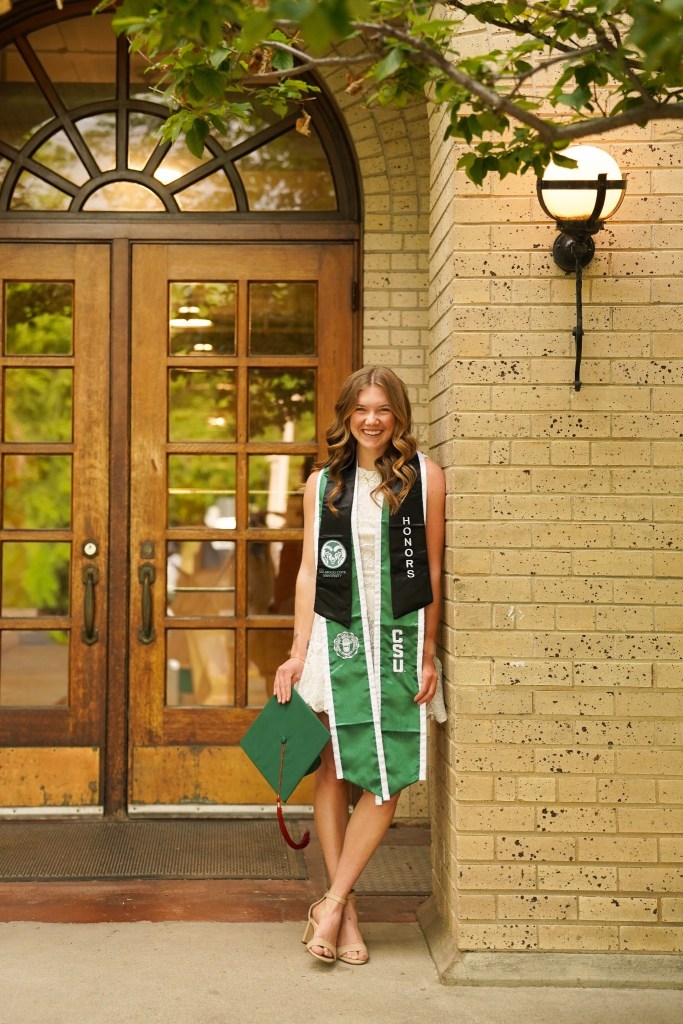
Madison is heading into her master’s in Ecosystem Science and Sustainability at CSU, where she is also earning a certificate in climate adaptation and risk management. Based in Breckenridge, she is looking for work in sustainability and helping communities adapt to climate change. Where she really wants to land is in the space between researchers and communities.
“I really do think we can’t generate change without community input,” said Madison. “I want to work in between the community and researchers to help build those sustainable solutions.”
Connect with Madison on LinkedIn to learn more about her work.


